CamelCase vs PascalCase vs snake_case vs kebab-case: A Clear Guide for Marketers and Developers
Understand camelCase, PascalCase, snake_case, and kebab-case, including where each naming style fits for developers, marketers, and content teams.
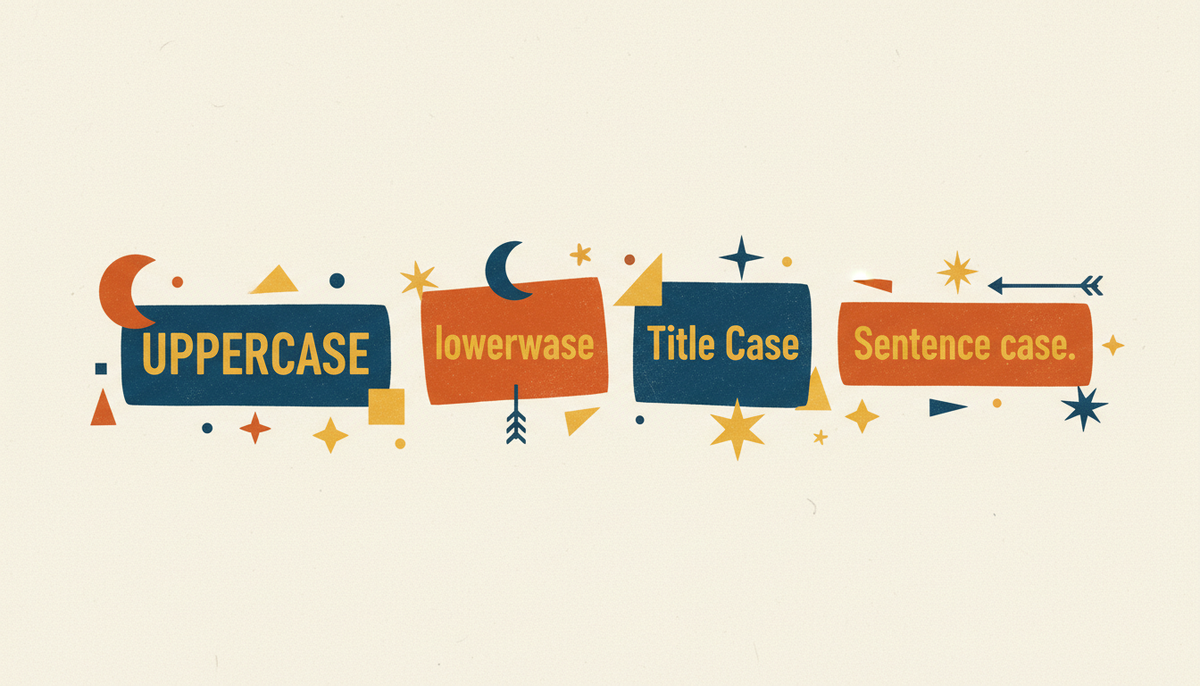
Naming conventions tend to get filed mentally under "developer stuff," which is fair to a point. Still, marketers, content teams, SEO folks, and product people run into them all the time. URLs, campaign names, design tokens, spreadsheet exports, CSS classes, content labels, event tracking. The names spread everywhere.
So it helps to know what you are looking at.
What these naming styles actually mean
Let us start with the plain definitions.
camelCase
The first word is lowercase, and each following word begins with a capital letter.
Example:
contentStrategyGuide
PascalCase
Every word begins with a capital letter.
Example:
ContentStrategyGuide
snake_case
Words are lowercase and separated with underscores.
Example:
content_strategy_guide
kebab-case
Words are lowercase and separated with hyphens.
Example:
content-strategy-guide
Each style has its own logic, and none of them is inherently superior in every situation.
Where each style usually appears
camelCase
Often used in JavaScript variables, internal labels, and certain app naming patterns.
PascalCase
Common in class names, components, and product-facing labels that need a more formal structure.
snake_case
Often shows up in database fields, backend systems, analytics labels, and exported data.
kebab-case
Very common in URLs, CSS naming, and file or slug patterns on the web.
That last one matters for marketers more than they sometimes expect.
Why marketers should care
Because inconsistent naming causes avoidable mess.
A campaign name in one format becomes a tracking label in another, then appears in a URL slug in a third. Suddenly reporting is harder to read, files are harder to find, and no one is quite sure which version is the official one.
This is not a deep technical crisis. It is just low-level chaos.
Understanding the naming styles helps with:
- Cleaner URL planning
- Better naming consistency across teams
- Easier spreadsheet and analytics work
- Less confusion in content operations
Which style is best for URLs?
For URLs, kebab-case is usually the cleanest option.
Why?
- It is easy to read
- It separates words clearly
- It is common on the web
- It tends to look natural in slugs
If you are naming blog URLs or landing page paths, kebab-case is usually the safest default.
Which style is easiest for content teams?
For everyday editorial use, plain language is best, but when teams need structured labels behind the scenes, snake_case and kebab-case are often the easiest to parse quickly.
camelCase and PascalCase are more common in product and development contexts, though marketers still run into them when dealing with tooling, analytics, or documentation.
Common mistakes people make
Mixing styles in the same system
This creates friction faster than people expect.
Using spaces where the system expects a structured name
This can break consistency, especially in files or tracking labels.
Picking a style for aesthetic reasons only
Readability and compatibility matter more than personal taste here.
Manually converting the same phrases again and again
That is tedious work and usually unnecessary.
If you need to switch a phrase from one case style to another quickly, Craften's Case Converter makes that cleanup easier, especially when names move between marketing docs and product systems.
A practical rule of thumb
Use the naming style that best fits the environment:
- URLs, usually kebab-case
- Structured database or analytics labels, often snake_case
- Variables and application logic, often camelCase
- Components and classes, often PascalCase
You do not need to memorize every technical nuance to benefit from this. You just need enough clarity to stop mixing them by accident.
Final thought
CamelCase, PascalCase, snake_case, and kebab-case are really just different ways of making multi-word names usable in different systems. Once you see that, the whole topic becomes less intimidating.
It is not about jargon. It is about keeping names readable where they need to live.