Headline Capitalization Rules: A Simple Guide for Content Teams
Learn the headline capitalization rules content teams actually need, including title case basics, sentence case choices, and common editing mistakes.

Headline capitalization seems simple right up until five people edit the same article. Then suddenly one person is capitalizing every preposition, another is lowercasing half the title, and someone else is quietly checking a style guide with the expression of a person who regrets volunteering for this job.
So yes, it helps to have a rule.
Not because capitalization is the center of the content universe, but because small inconsistencies make teams slower than they need to be.
Why capitalization rules matter
Readers usually do not stop and think, "Ah yes, inconsistent title casing." But they do notice when a page feels uneven.
Capitalization affects:
- Visual consistency
- Readability
- Editorial polish
- Workflow speed
That last one is easy to underestimate. A simple rule saves an unreasonable number of tiny discussions.
The two most common systems
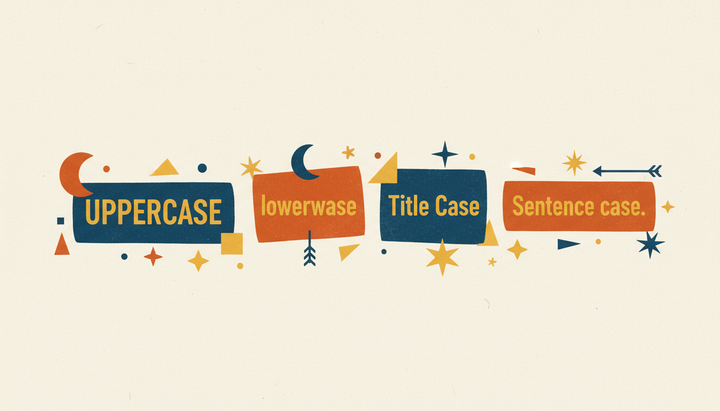
Most teams end up choosing between title case and sentence case.
Title case
Main words are capitalized.
Example:
How to Build a Better Content Workflow
Sentence case
Only the first word and proper nouns are capitalized.
Example:
How to build a better content workflow
Both are acceptable. The trick is picking one based on context and then using it consistently.
Where teams get stuck
The hardest part is usually not the overall system. It is the smaller words.
Questions come up like:
- Should "with" be capitalized?
- What about "for"?
- Do I capitalize the second word after a colon?
This is where style guides differ a little, which is why the internet can make a simple question feel weirdly unsettled.
If your team wants fewer debates, the easiest solution is to create a short internal standard and stop there.
A practical rule for busy teams
If you use title case, try this:
- Capitalize major words
- Lowercase short articles, conjunctions, and prepositions unless they begin or end the title
- Capitalize proper nouns
If you use sentence case, keep it even simpler:
- Capitalize the first word
- Capitalize proper nouns
- Leave the rest lowercase unless grammar requires otherwise
It does not need to be more ornate than that for most teams.
What about style guides like AP and Chicago?
They matter if your publication already follows one strictly. If it does not, borrowing parts of a formal guide is often enough.
The goal is not to become a miniature copy desk overnight. The goal is to remove uncertainty from routine publishing work.
Honestly, a short internal guide your team actually uses is more valuable than a perfect external standard no one remembers.
Common capitalization mistakes
Capitalizing almost every word by instinct
This makes title case look noisy.
Applying title case rules unevenly
One headline looks careful. The next looks improvised.
Switching styles between channels without meaning to
Your blog uses title case, your landing pages use sentence case, and suddenly someone mixes them halfway through the same campaign.
Spending too much time fixing the same issue manually
This is the kind of repetitive work that should be lighter than it often is.
If your team frequently tidies headline drafts, Craften's Case Converter is a practical shortcut for getting the casing into the right shape before final review.
A lightweight workflow that helps
- Choose your default style.
- Write one short internal note on how to handle edge cases.
- Add a quick capitalization check before publishing.
- Correct headlines in batches instead of one by one when possible.
That is it. Not glamorous, but clean.
Final thought
Headline capitalization rules are useful because they reduce friction. They help teams publish faster, edit less, and keep the page looking coherent without turning every title into a small editorial tribunal.
That is probably enough of a reason to have them.